
Real impact
Recycling PET isn't
marketing — it's economics
Every ton of flake we produce replaces virgin plastic, reduces emissions, and keeps valuable materials in circulation.
Why it matters
Post-consumer PET has value.
We recover it.
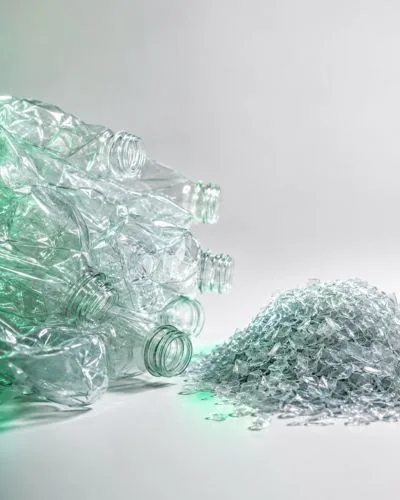
Mexico generates millions of PET bottles every day. Most end up in landfills or in the natural environment, wasting a material with up to eight useful lives. Reycycle captures that flow and transforms it into high-purity flake ready to re-enter formal value chains.
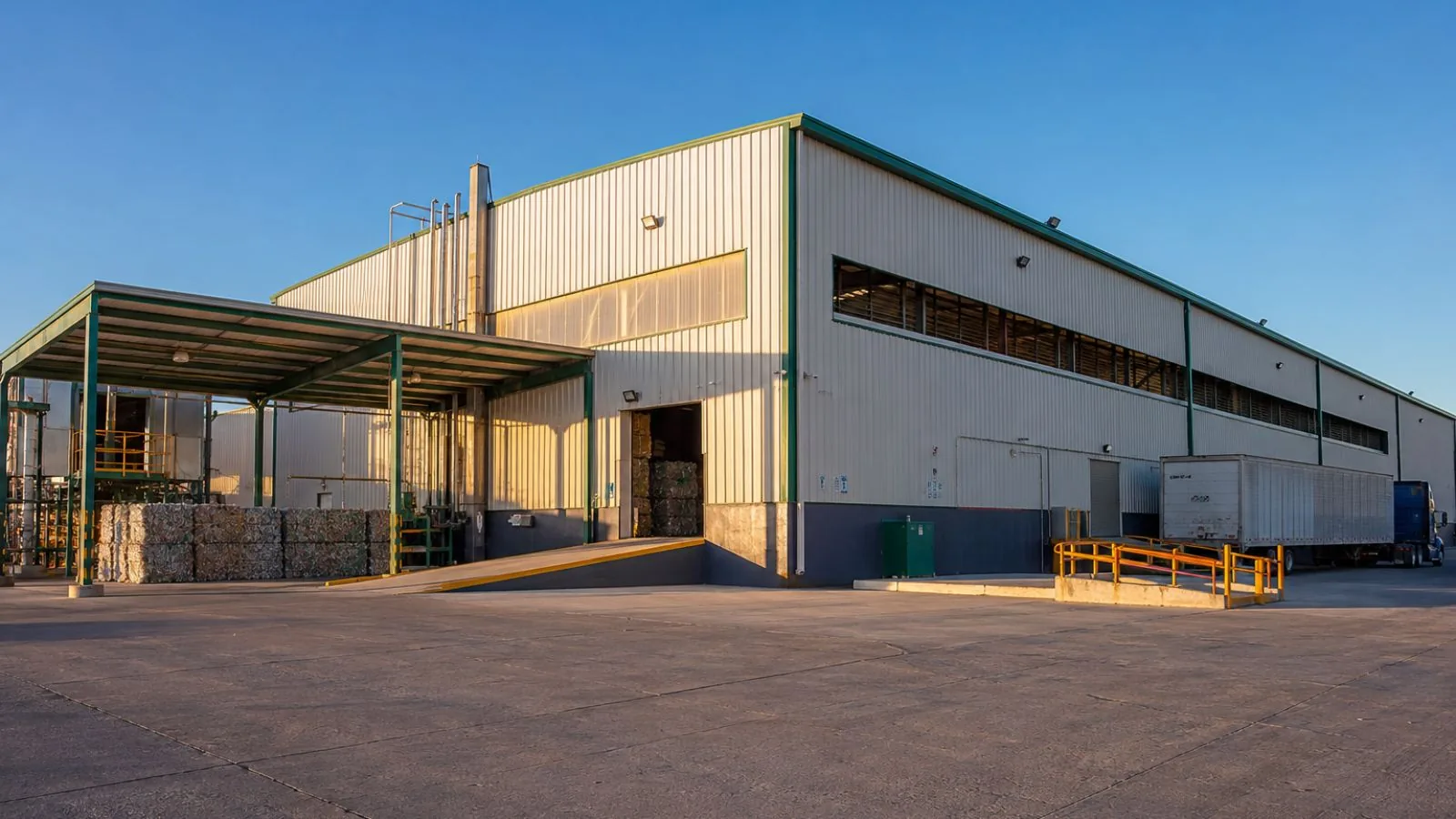
Our plant in Reynosa, Tamaulipas, processes material collected from regional sorting networks and converts it into transparent industrial-grade flake, suitable for sectors requiring rigorous specifications: textile fiber, strapping, thermoformed sheet, and food-contact-oriented applications.
By choosing Reycycle, your buyers don't just acquire a raw material — they support a model that extends plastic's useful life and reduces pressure on non-renewable petrochemical resources.
Data per ton processed
What every ton prevents
less CO₂ vs.
equivalent virgin PET
bottles recovered
from the environment
less energy than
producing virgin PET
post-consumer
source material
Estimates based on published life-cycle comparison literature for recycled vs. virgin PET. Actual values vary by logistics and collection mix.
Circular model
Plastic doesn't die — it circulates again
The circular economy proposes that materials retain their value as long as possible. PET is one of the plastics best suited for this model: it can be recycled multiple times without losing its essential structural properties.
Our approach
Six pillars that guide every decision
Traceable origin
We work with formal sorting networks in northeastern Mexico to ensure that PET arrives classified and with documented chain of custody.
Clean process
Our industrial washing minimizes water use through recirculation circuits. Effluents are treated before final disposal.
Social impact
Every Reycycle flake purchase sustains a value chain that integrates collectors, sorters, and plant operators into the circular economy.
Sustainable quality
Low-quality recycled material isn't sustainability — it's risk. Our controls ensure flake with technical specifications that buyers can incorporate without compromising their end product.
Strategic location
Reynosa with direct access to Texas via the Pharr bridge — we supply both the Mexican industry and US buyers with competitive lead times.
Transparency
We don't oversell certifications. We operate under process standards oriented toward food-grade quality and share available technical documentation for buyers to conduct their own compliance assessment.
Recycled PET vs. virgin
Why buyers are switching to rPET
High-purity recycled PET competes directly with virgin in most applications, with significant environmental and cost advantages.
| Criterion | Virgin PET | rPET Reycycle |
|---|---|---|
| Origin | Petrochemical (non-renewable) | Post-consumer (circular) |
| CO₂ emissions (estimated) | ~3.5 kg CO₂ / kg | ~1.5–2 kg CO₂ / kg |
| Energy consumption | High (chemical synthesis) | ~60% lower |
| Purity | ≥ 99% | ≥ 99% (controlled process) |
| Intrinsic viscosity (IV) | 0.72–0.80 dL/g | 0.70–0.78 dL/g |
| Common applications | Packaging, fiber, sheet | Fiber, strapping, sheet, packaging |
| Regulatory compliance | Standard | Verify by application and market |
Emission values are comparative life-cycle estimates. Purity and IV correspond to Reycycle's target specifications.
Environmental claims notice: The impact metrics presented are estimates based on published life-cycle comparisons for recycled vs. virgin PET. Actual values depend on specific collection logistics, material mix, and plant efficiency. Reycycle operates under process standards oriented toward food-grade quality. Conformity with specific regulations (FDA, EFSA, or others) must be verified by the buyer according to their application and target market.
Ready to close the loop?
Make your PET purchase an act with impact
Explore our presentations, request technical specifications, or schedule a visit to our plant in Reynosa.