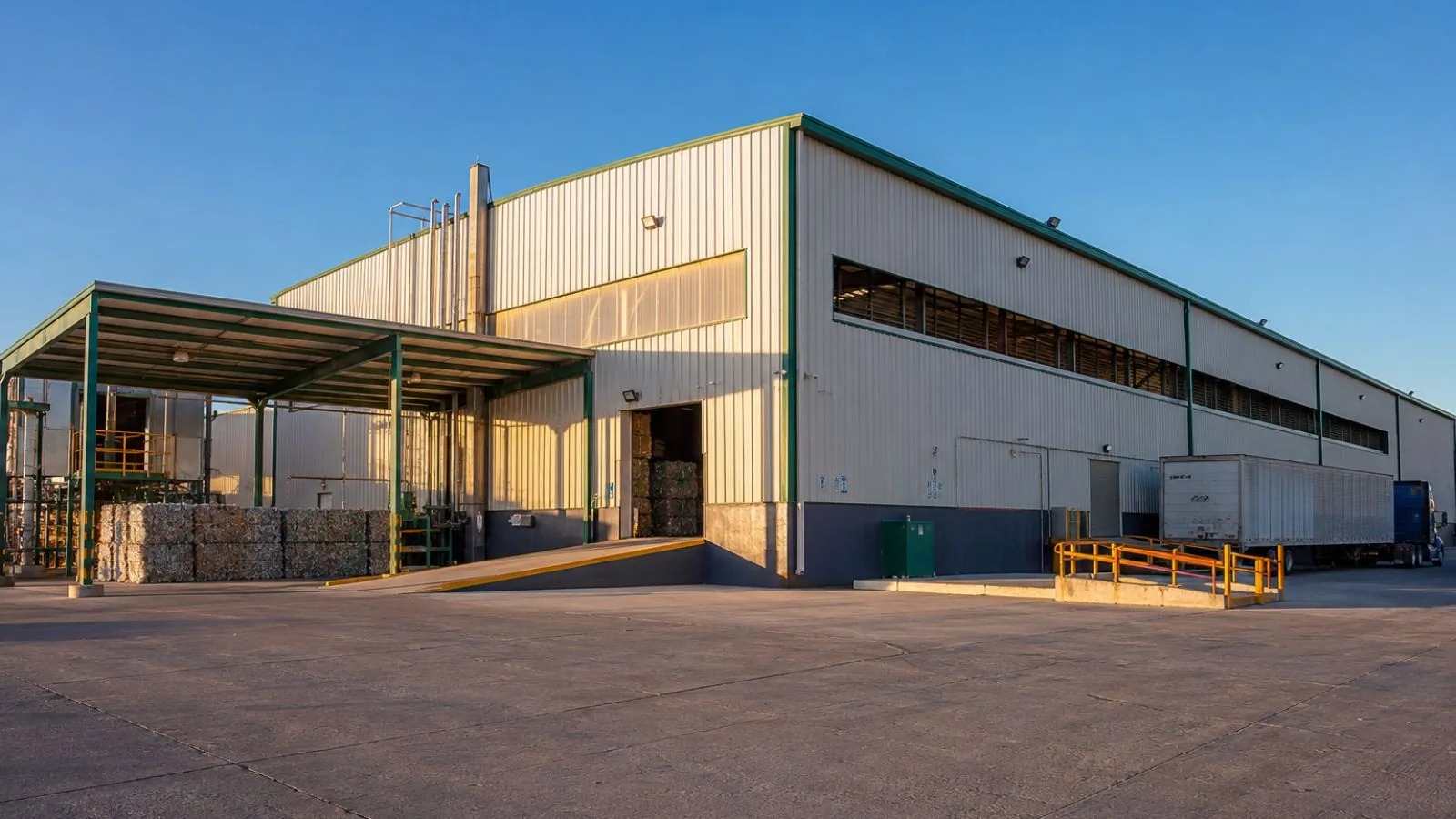
From bottle to flake
A clean, traceable,
industrial-scale process
Every stage is designed to ensure the purity of the final material and meet the requirements of the industries that use it.
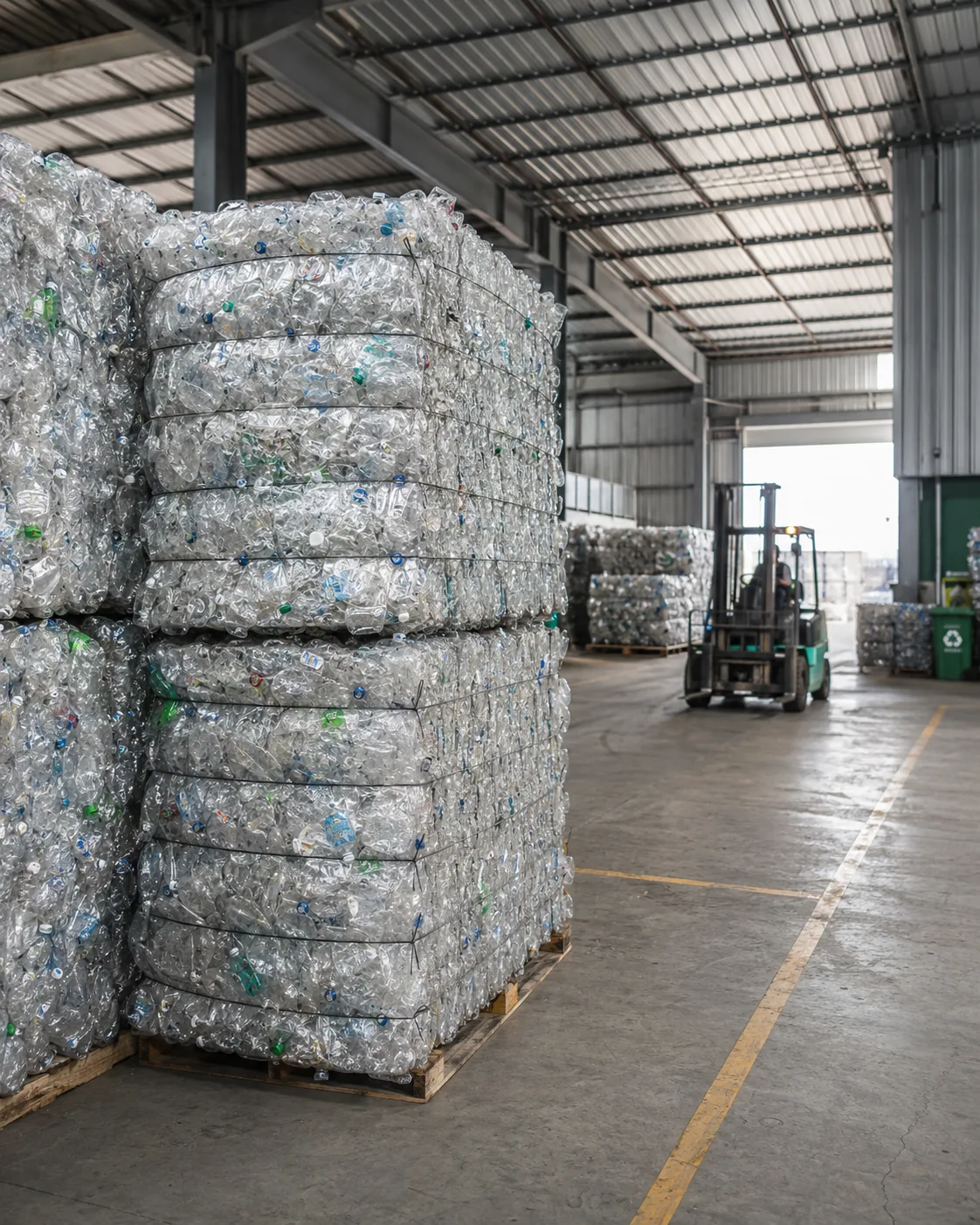
Verified raw material from the source
We work exclusively with transparent post-consumer PET from verified sources. Incoming material selection is the first quality control step in the process: without the right feedstock, there is no right product.
We receive pre-sorted material and subject it to a second internal classification before it enters the production line, removing visible contaminants and any material other than transparent PET.
- Transparent PET bottles only — no color mixing
- Rejection of non-PET materials: PVC, HDPE, metals, glass
- Visual and densimetric inspection before processing
- Batch traceability from reception
The full process, step by step
Five controlled stages that transform post-consumer bottles into PET flakes ready for reprocessing.
-
Reception
Collection and initial sorting
We receive post-consumer PET from verified sources and carry out rigorous sorting by color, resin type, and level of visible contamination. Material that does not meet entry criteria is rejected at this stage, before entering the production line.
Transparent PET only Density-based separation Visual batch inspection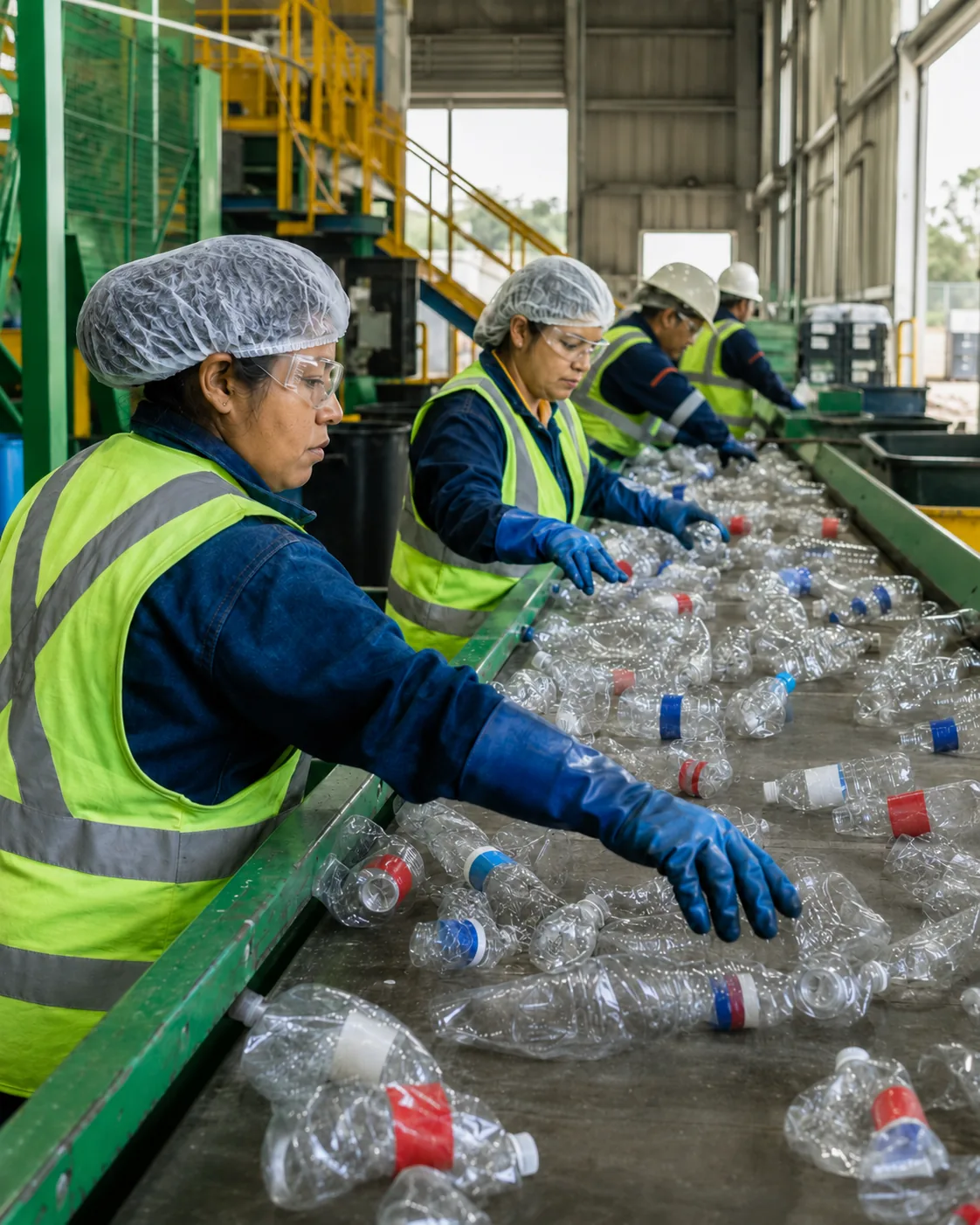
-
Preparation
Primary grinding
Selected bottles pass through industrial shredders that reduce them to manageable fragment sizes. This step enables more effective washing by increasing the surface area of contact between the material and cleaning agents and water.
20–50 mm fragments Cap and label separation Fines air separation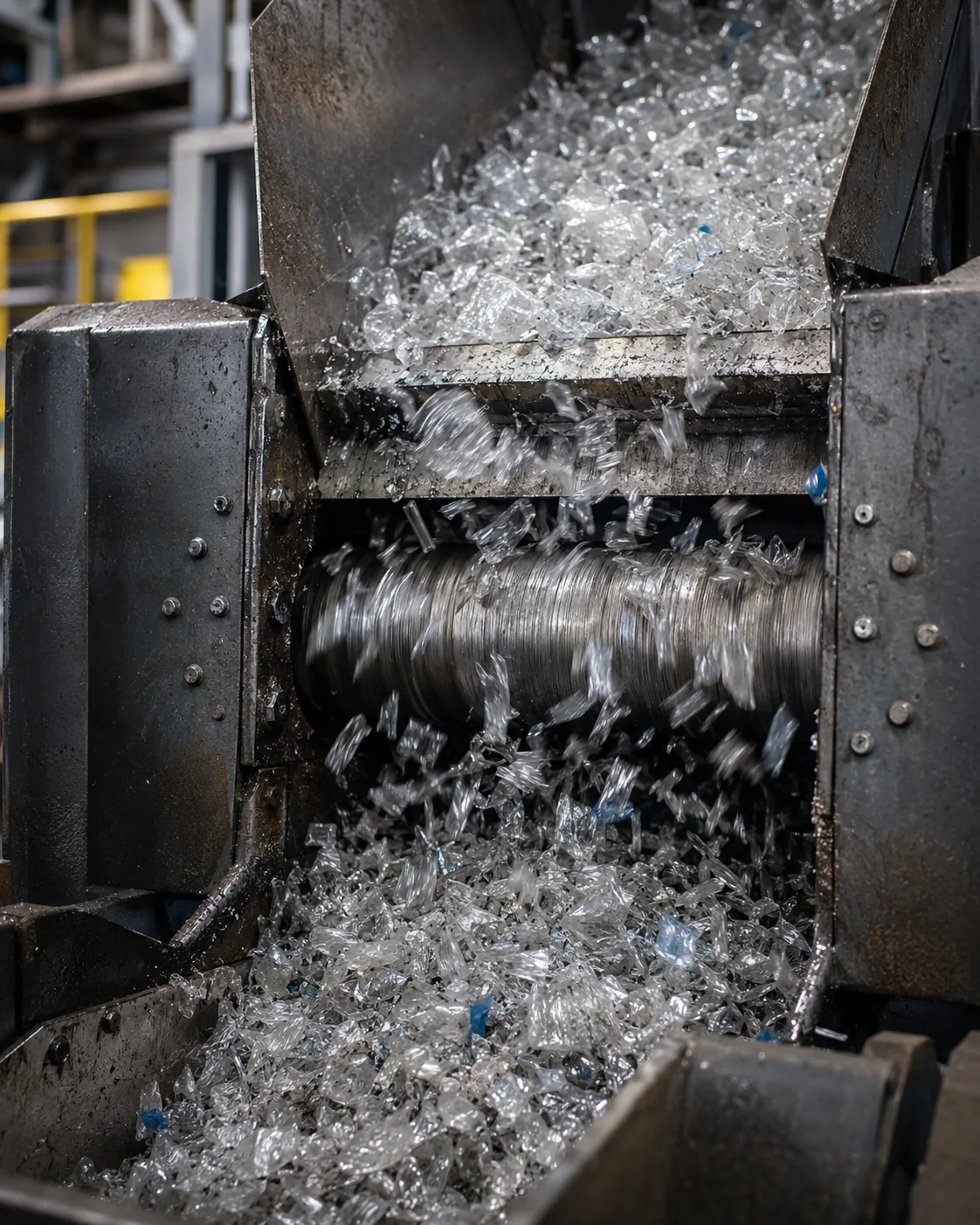
-
Cleaning
Multi-stage industrial washing
The shredded material passes through a multi-stage washing system that removes contaminants, adhesives, residual labels, and surface dirt. Hot water and food-process compatible cleaning agents are used, followed by rinsing and float separation to remove lightweight materials.
Hot wash Float separation Adhesive removal Final rinse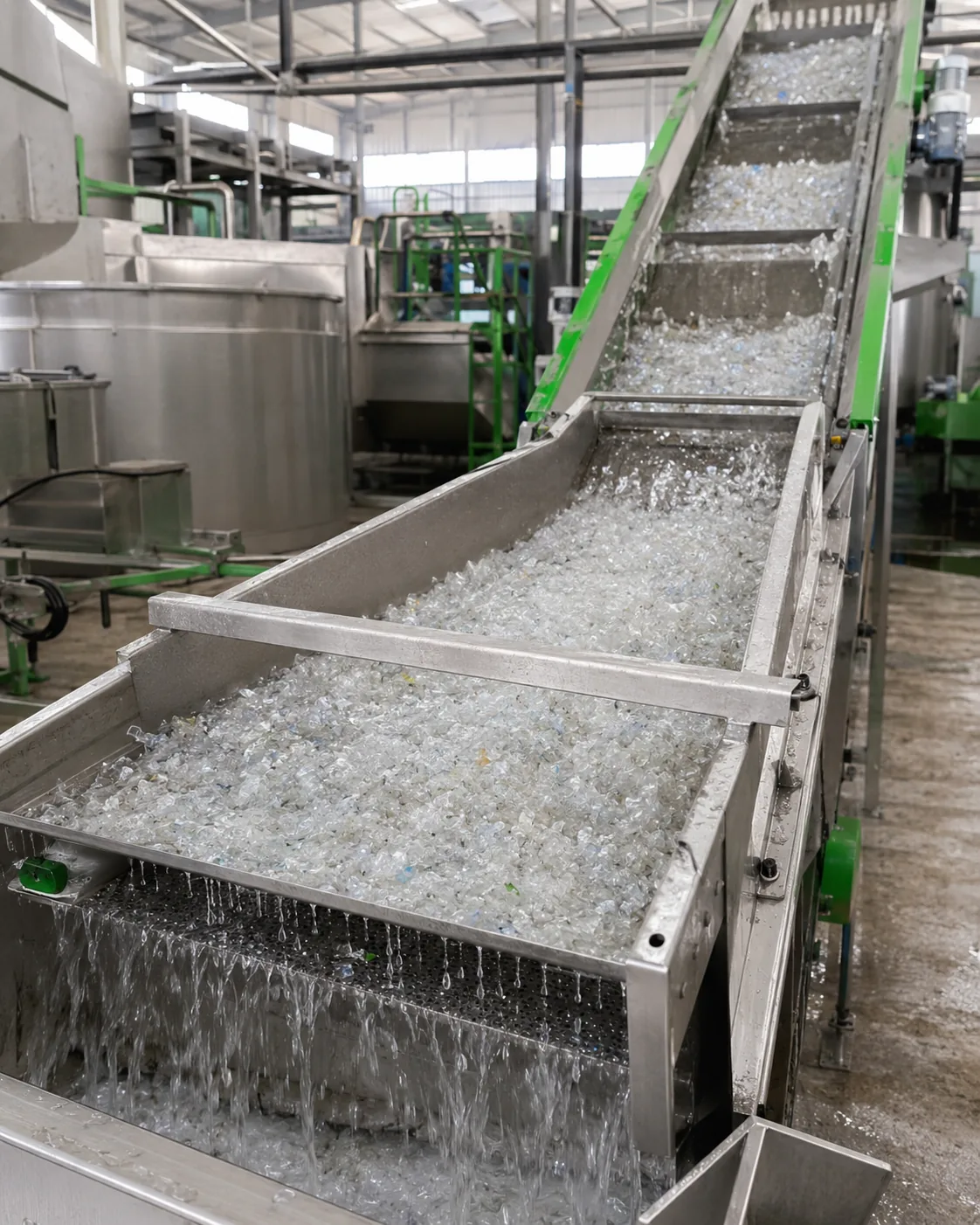
-
Sizing
Final grinding and size classification
The washed material is reduced to final flake size through knife mills. A sieve system classifies the flake by size and separates out-of-range fines, ensuring uniformity of the final product between 8 and 14 mm.
8–14 mm flake In-line sieving Fines separation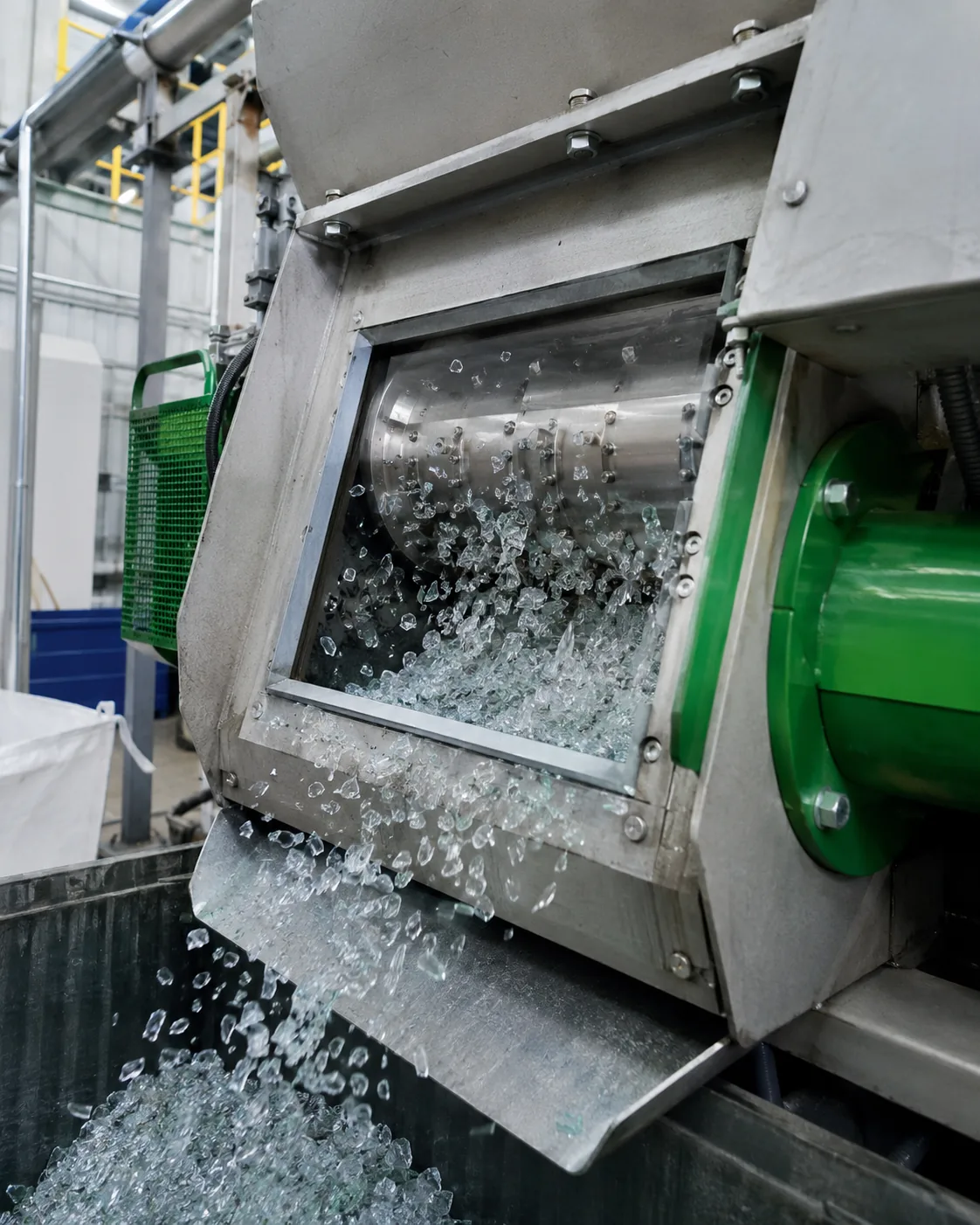
-
Finishing
Drying and moisture control
The classified flake passes through a drying system that reduces residual moisture to below 0.5% — the level required to ensure performance in the customer's processing equipment and stability during storage and transport.
Moisture ≤ 0.5% Hot-air drying Temperature control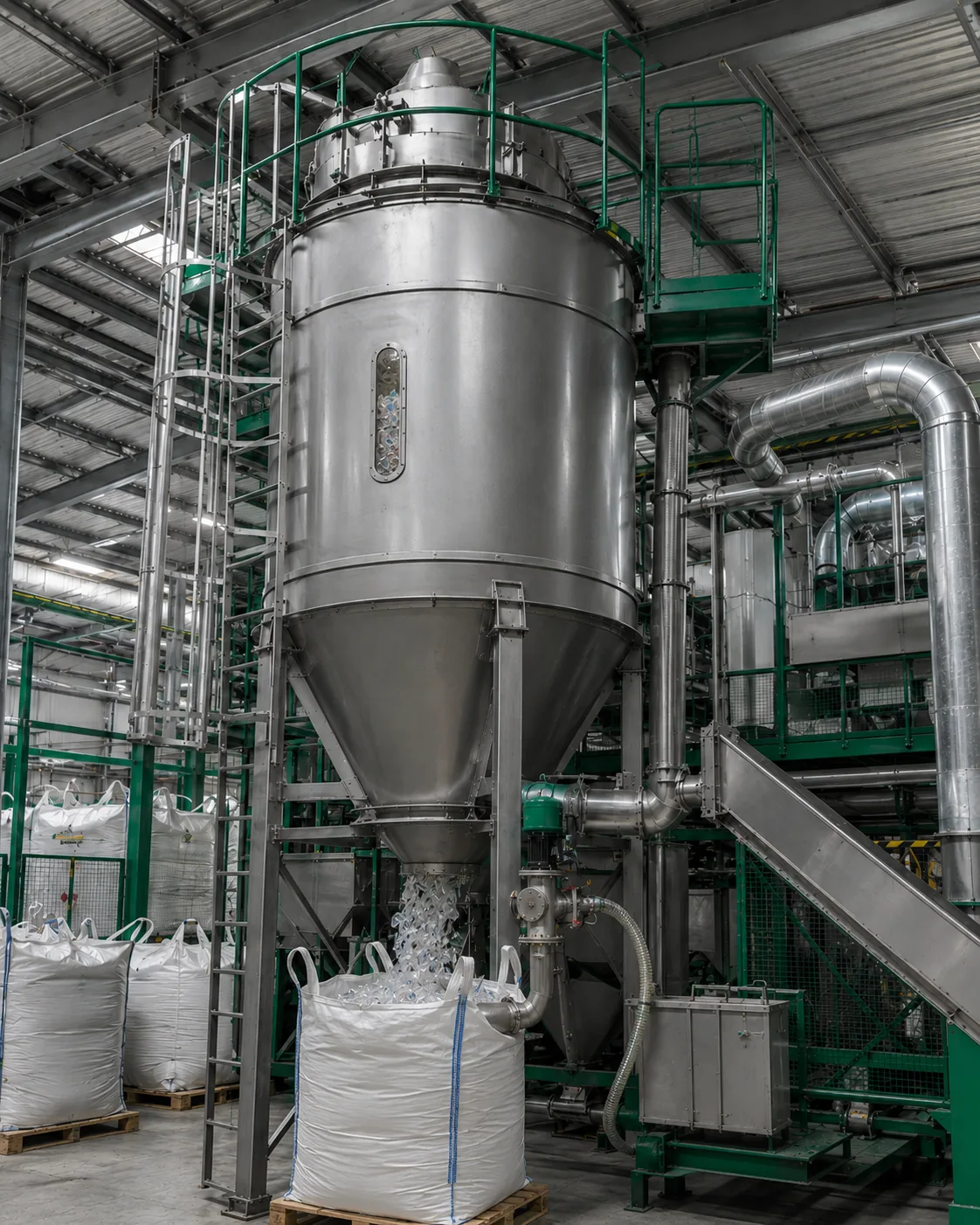
-
Final product
Food-grade transparent PET flakes
The result is transparent PET flake with purity above 99%, moisture below 0.5%, and uniform size from 8 to 14 mm — ready to package and ship in big bags or 25 kg bags.
Purity > 99% Moisture ≤ 0.5% Size 8–14 mm Transparent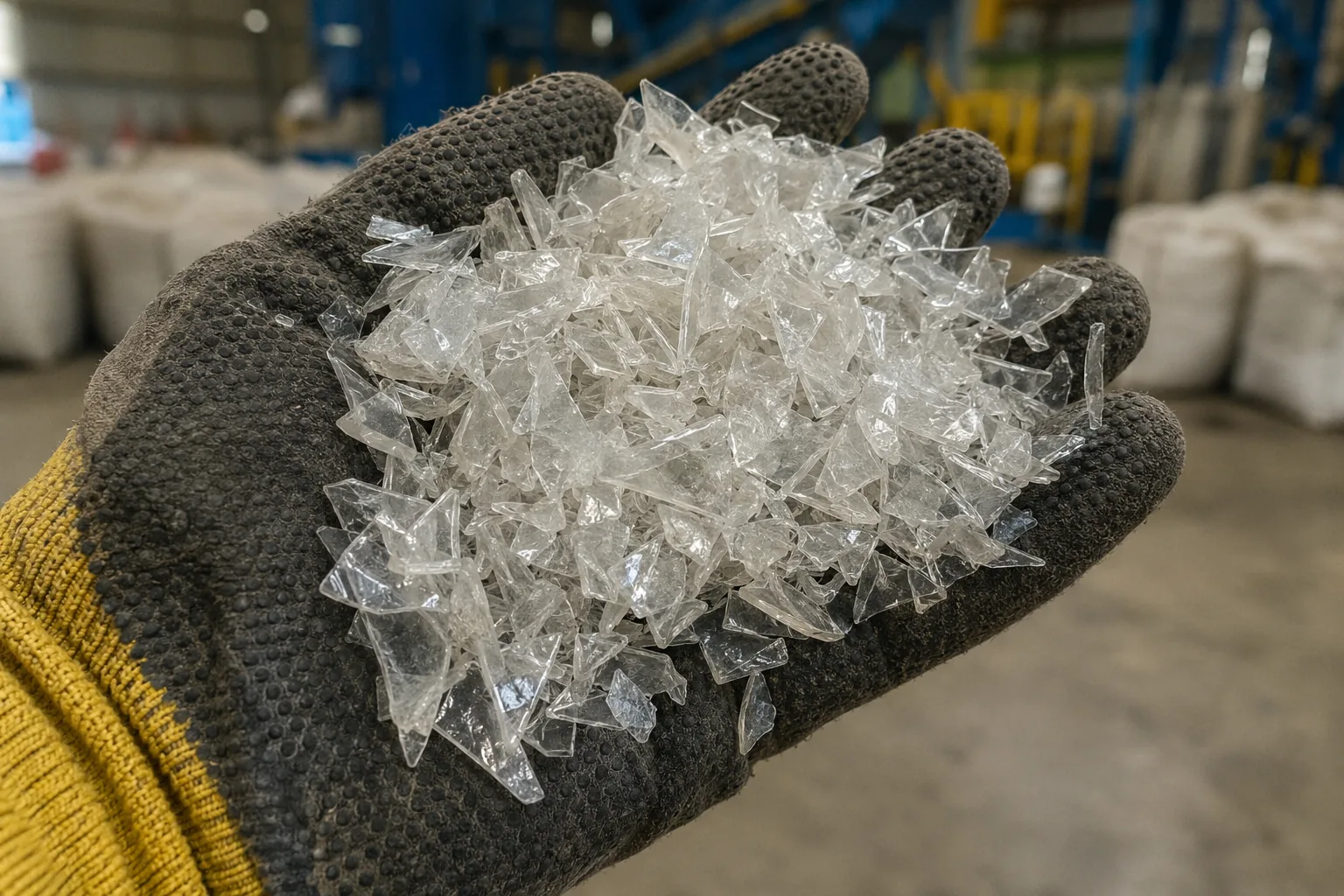
Four in-line verification checkpoints
Quality control is not a final step — it is a continuous process integrated into every production stage.
Incoming inspection
Batch review: color, resin type, and contamination level before accepting material into the line.
Post-wash check
Verification of adhesive and contaminant removal after the multi-stage washing system.
Particle size
Size and uniformity check after grinding. Out-of-range material is returned to the process.
Moisture and purity
Final moisture and purity control before packaging. Each approved batch receives a batch certificate.
stages
checkpoints
of final product
in final product
Visit our plant or request technical information
We are in Reynosa, Tamaulipas, with direct access via the Monterrey Highway. We coordinate plant visits for customers who want to see the process firsthand.